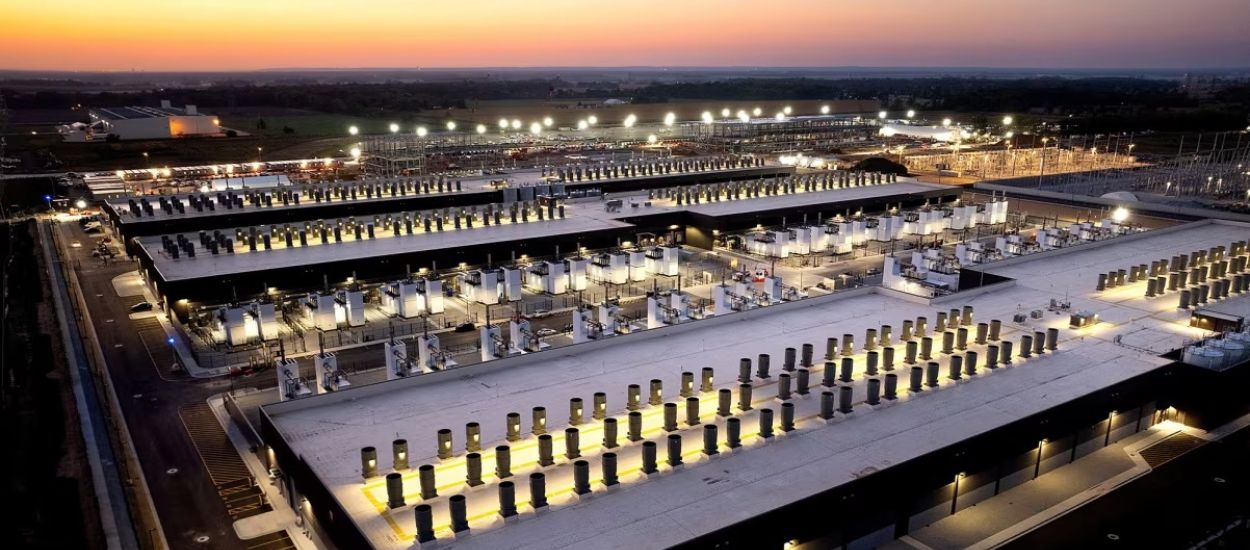
The data center industry is experiencing an infrastructure transformation unlike anything since the advent of the internet era. While headlines focus on the trillions being poured into AI infrastructure, a critical downstream challenge is emerging that demands immediate attention: the unprecedented acceleration of hardware refresh cycles and the mounting wave of complex electronic waste it’s creating.
For data center operators, the question isn’t whether to upgrade for AI—it’s whether your IT Asset Disposition (ITAD) program can handle what comes next.
The Numbers Tell the Story

The scale of the AI buildout is staggering. Data center power capacity is projected to grow from approximately 30 gigawatts in 2025 to over 90 gigawatts by 2030, representing a 22% compound annual growth rate. Data center equipment and infrastructure spending reached $290 billion in 2024, with the four largest hyperscalers—Alphabet, Microsoft, Amazon, and Meta—investing nearly $200 billion in capital expenditures. That figure is expected to climb by over 40% in 2025.
But here’s what most miss: the global data center server market alone is projected to grow nearly fivefold, from $204 billion in 2024 to $987 billion by 2030. This isn’t just expansion—it’s replacement at an accelerated pace that’s rewriting the rules of asset lifecycle management.
The 18-Month Problem
Traditional data center hardware followed predictable patterns. CPU-based servers were typically depreciated over five to seven years, with hyperscalers normalizing on six-year useful life assumptions beginning in 2023-2024. Facilities had decades to optimize, with multiple server refresh cycles spread across a building’s 30-year lifespan.
AI has shattered those timelines.

Several tech experts estimate AI chips can be used to train large language models between 18 months and three years, with the economic viability dropping off sharply as newer, more efficient architectures arrive. NVIDIA’s major GPU architectures now arrive approximately every two years—Ampere (2020), Hopper (2022), Blackwell (2024), and Rubin (expected 2026)—a dramatic acceleration from the traditional 6-year depreciation schedules that data centers have relied upon.
The implications are profound. Data centers that once planned for gradual, predictable hardware transitions are now facing compressed cycles where equipment becomes economically obsolete before it physically fails. About 9% of GPUs fail over the course of a year, compared with around 5% of CPUs, driven by the significant strain and heat exposure from training AI models.
Infrastructure Complexity Multiplies Disposal Challenges
The shift to AI isn’t just about faster refresh cycles—it’s fundamentally changing what needs to be disposed of and how.
Power Density Explosion
Traditional data centers evolved slowly from 3 kilowatts per rack to around 10 kilowatts over decades. Based on shipments of GPUs for AI server applications, 60% of all servers being installed now support AI applications. These accelerated compute servers represent a dramatic leap: training workloads require high power densities of 100 to 200 or more kilowatts per rack, with some frontier systems approaching one megawatt per rack.
NVIDIA’s 2025 release of the GB200 is set to nearly double power density again, bringing rack densities to around 132 kilowatts, with the 2026 VR200 generation potentially reaching 240 kilowatts per rack.
Liquid Cooling: The New Complexity
To manage these extreme thermal loads, the industry is rapidly transitioning to liquid cooling infrastructure. Facilities can expect increased pressure to comply with reporting requirements for environmental impacts and meet higher expectations regarding the disposal of e-waste and liquid coolant.
The data center liquid cooling market is projected to grow from $4.9 billion in 2024 to $21.3 billion by 2030. Direct-to-chip cooling systems, immersion cooling tanks, and complex coolant distribution units are becoming standard—each adding layers of complexity to the decommissioning process.
Specialized Components Requiring Specialized Handling
Unlike conventional data centers, AI facilities rely on specialized hardware such as TPUs, FPGAs, and high-bandwidth memory chips, which require careful handling during decommissioning. High-bandwidth memory comes from three main players—Samsung, SK Hynix, and Micron—with DRAM prices surging over 60% in late 2025 and projected to nearly double by mid-2026, making proper recovery and remarketing of these components increasingly valuable.
The E-Waste Time Bomb
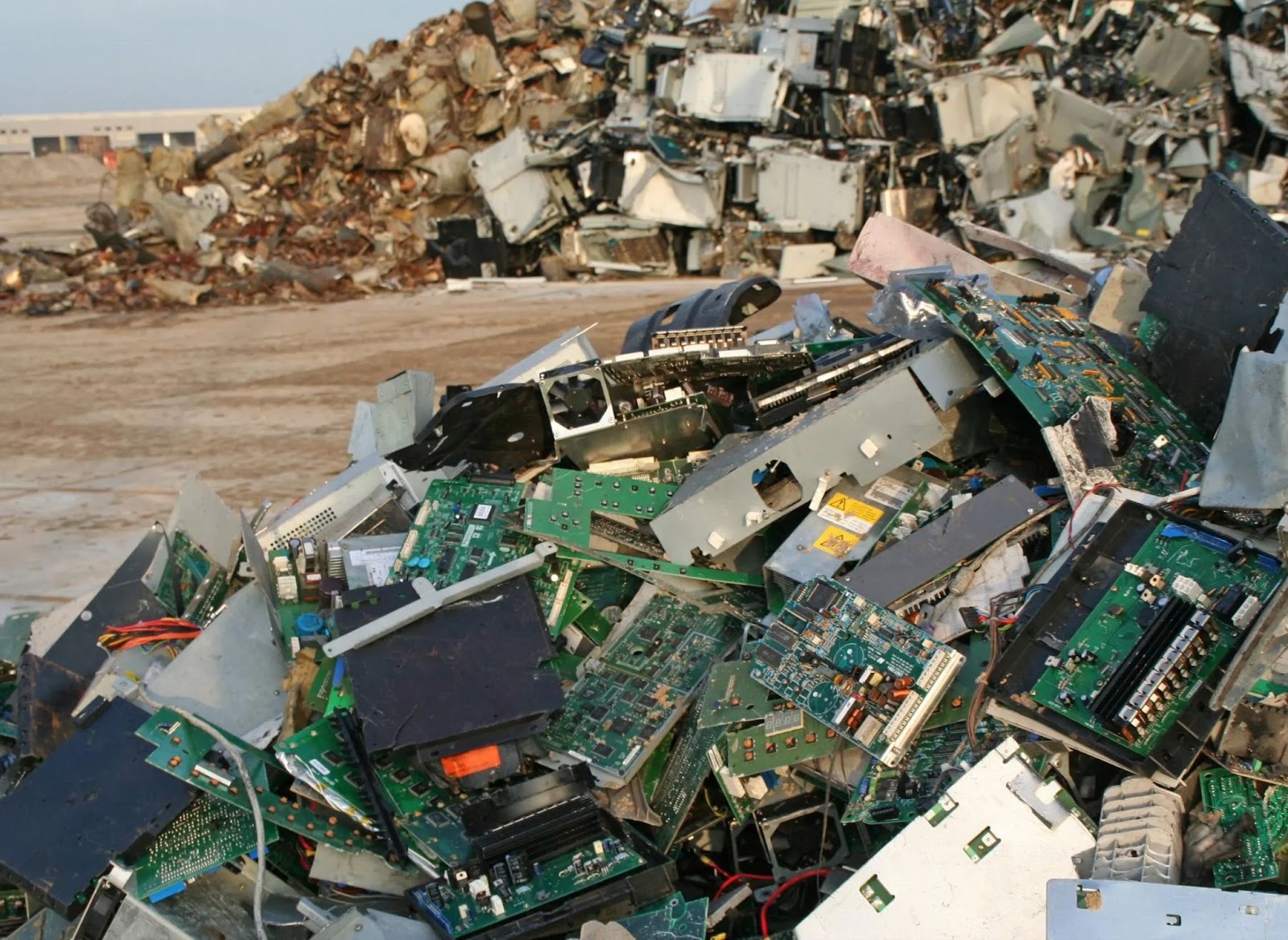
The environmental stakes couldn’t be higher. With an estimated lifespan of just three to five years, between 20 and 70 million expensive hard disk drives in the US reach their end of life each year—most of which are shredded and sent to landfills.
Research in the Nature Computational Science journal found that without sound management strategies involving reuse and redeployment, the hardware requirements of AI and data centers will lead to a huge amount of additional electronics waste.
The rapid hardware turnover creates what one industry analyst called a “ticking time bomb.” Rapid hardware turnover—new models replacing old ones every few weeks—wastes the energy of prior training, amplifying both the environmental and economic costs.
Market Dynamics: ITAD as a Growth Engine
The ITAD industry is responding to this challenge with significant growth. The global IT asset disposition market size was estimated at USD 25.31 billion in 2024 and is projected to reach USD 54.54 billion by 2030, growing at a CAGR of 14.0%.
Sims Lifecycle Services reported a 21% revenue increase in the first half of its 2025 fiscal year, while Iron Mountain reported a revenue increase of 119% over 2023. Data center decommissioning has been called the “growth engine for the whole industry,” with hyperscale refreshes now dominating the most competitive segment of ITAD.
But growth alone doesn’t solve the complexity problem. The question is whether ITAD providers are evolving their capabilities as fast as the technology is advancing.
Compliance and Security in the AI Era
AI data centers handle vast amounts of sensitive information, making compliance with data protection laws essential, requiring organizations to follow industry regulations such as GDPR, HIPAA, and NIST 800-88 when decommissioning AI hardware.
The implementation of IEEE 2883-2022 marks a significant step forward from the NIST 800-88 Data Destruction Standard developed in 2006 and last updated in 2021, providing comprehensive guidelines for data destruction that address the unique challenges posed by modern storage technologies.
The EU’s Corporate Sustainability Reporting Directive (CSRD) requires many large companies to report on their environmental and social impact for the first time in 2025, for the 2024 financial year. California’s Climate Disclosure Bill similarly requires larger companies to disclose climate-related financial risks publicly.
Data center operators are increasingly being called upon to demonstrate that their ITAD processes incorporate sustainable practices throughout operations and supply chain management.
Memory and Component Value Recovery
The economics of AI hardware disposal have shifted dramatically. DRAM prices surged over 60% in late 2025, with projections of nearly doubling by mid-2026, with inventories shrinking to critically low levels. This tight supply situation, driven by memory manufacturers reallocating capacity from standard DRAM to high-bandwidth memory for AI accelerators, means proper recovery and remarketing of memory components has become increasingly valuable.
The strong secondary market for recent-generation AI hardware demonstrates the value retention of these assets. However, capturing this value requires sophisticated testing, certification, and remarketing capabilities that go far beyond traditional ITAD operations.
What Data Centers Should Demand from ITAD Partners

The accelerating pace of AI infrastructure demands a new standard for ITAD partnerships. Leading data center operators should evaluate their ITAD providers on these critical capabilities:
1. Specialized AI Hardware Expertise
Can your ITAD partner handle the unique decommissioning requirements of GPU clusters, TPUs, and high-bandwidth memory modules? Do they understand the specialized handling, testing, and remarketing processes required for these high-value AI accelerators?
2. Advanced Data Security Protocols
With IEEE 2883-2022 representing the new standard, is your provider equipped with the latest data destruction technologies that go beyond the outdated NIST 800-88 guidelines? CompuCycle is one of the only ITAD companies with ISO-27001: Information Security Management Systems
3. Comprehensive Value Recovery
In a market where GPUs retain 95% of their value and memory prices have tripled, is your ITAD partner maximizing asset recovery through sophisticated testing, grading, and remarketing capabilities?
4. ESG Reporting and Transparency
Can your provider deliver the detailed environmental impact reporting now required under CSRD and California’s climate disclosure requirements? Do they offer real-time tracking and complete downstream accountability?
5. Rapid Response Capability
When refresh cycles compress from years to months, can your ITAD partner scale operations quickly enough to prevent your decommissioned hardware from becoming a storage liability?
6. Circular Economy Integration
By reusing equipment, data centers can extend the lifespan of hardware and reduce the volume of e-waste sent to landfills. Does your ITAD partner prioritize refurbishment and redeployment over destruction?
The Path Forward

The AI revolution isn’t slowing down. The global AI chip market reached $52.92 billion in 2024 and is projected to grow to $295.56 billion by 2030, representing a 33.2% compound annual growth rate. This growth trajectory will only intensify the pressure on ITAD programs.
Data center operators face a choice: continue with ITAD approaches designed for the CPU era, or partner with providers who understand the unique challenges of AI infrastructure lifecycle management.
At Compucycle, we’ve been preparing for this transformation. Our R2v3-certified facilities, advanced data destruction capabilities, and specialized handling procedures for AI hardware components position us to help data centers navigate this accelerated refresh cycle while maximizing value recovery and minimizing environmental impact.
The AI era demands more from every link in the data center value chain. Your ITAD program is no exception.
Ready to future-proof your ITAD strategy for the AI era? Contact Compucycle to discuss how we’re helping leading data centers manage the complexity of accelerated hardware turnover with security, sustainability, and value recovery as core principles.
Compucycle | Certified ITAD Services for the Data Center Industry
Sources
- Avid Solutions Inc. (2025). “13 Data Center Growth Projections That Will Shape 2026-2030.” https://avidsolutionsinc.com/13-data-center-growth-projections-that-will-shape-2026-2030/
- IoT Analytics. (2024). “Data Center Infrastructure Market: AI-driven CapEx pushing IT and facility equipment spending toward $1 trillion by 2030.” https://iot-analytics.com/data-center-infrastructure-market/
- SiliconANGLE. (2025). “Resetting GPU depreciation: AI factories bend, don’t break, useful life assumptions.” https://siliconangle.com/2025/11/22/resetting-gpu-depreciation-ai-factories-bend-dont-break-useful-life-assumptions/
- CNN Business. (2025). “AI chips lifecycle questions.” https://www.cnn.com/2025/12/19/tech/ai-chips-lifecycle-questions
- Cudo Compute. “NVIDIA GPU Upgrade Planning.” https://www.cudocompute.com/blog/nvidia-gpu-upgrade-planning
- Grand View Research. (2024). “Data Center Liquid Cooling Market Report.” https://www.grandviewresearch.com/industry-analysis/data-center-liquid-cooling-market-report
- Wang, Y., et al. (2024). “E-waste challenges of generative artificial intelligence.” Nature Computational Science. https://www.nature.com/articles/s43588-024-00712-6
- Grand View Research. (2024). “IT Asset Disposition Market Analysis.” https://www.grandviewresearch.com/industry-analysis/it-asset-disposition-market
- Resource Recycling. (2025). “Data centers and AI combine to create ITAD ‘growth engine.'” https://resource-recycling.com/e-scrap/2025/03/06/data-centers-and-ai-combine-to-create-itad-growth-engine/
- The Register. (2026). “Memory firm profits up as DRAM prices surge.” https://www.theregister.com/2026/01/06/memory_firm_profits_up_as/
- IEEE Standards Association. (2022). “IEEE 2883-2022 – Standard for Sanitizing Storage.” https://ieeexplore.ieee.org/document/9889781
- European Commission. “Corporate Sustainability Reporting Directive (CSRD).” https://finance.ec.europa.eu/capital-markets-union-and-financial-markets/company-reporting-and-auditing/company-reporting/corporate-sustainability-reporting_en
- California Office of the Attorney General. “Climate Disclosure.” https://oag.ca.gov/environment/climate-disclosure
- NextMSC. (2024). “Artificial Intelligence Chip Market Report.” https://www.nextmsc.com/report/artificial-intelligence-chip-market
Recent Articles
ITAD Isn’t a Recycling Decision. It’s a Risk Reduction & Brand Protection Decision.
Corporate hard drives with recoverable data have been sold on eBay. Containers of e-waste have washed up on Malaysian shorelines and been traced back to U.S. companies. In every case, the liability didn’t fall on…
The $987 Billion Question: Is Your ITAD Partner Ready for AI’s Hardware Avalanche?
The data center industry is experiencing an infrastructure transformation unlike anything since the advent of the internet era. While headlines focus on the trillions being poured into AI infrastructure, a critical downstream challenge is emerging…
Goodwill Houston Partners with CompuCycle to Offer Simple E-Waste Recycling for the Community
Goodwill Houston and CompuCycle have partnered to give Houstonians a simple, trustworthy way to donate and recycle household electronics.
Through this collaboration, residents can drop off laptops, desktops, tablets, monitors, and other household electronics at participating Goodwill Greater Houston donation centers. Reusable items help fund Goodwill’s job training and community programs, while non-resellable electronics are sent directly to CompuCycle’s certified Houston facility for secure, fully in-house recycling—ensuring materials are responsibly processed locally from start to finish.
CompuCycle Becomes Exclusive Woman-Owned E-Waste Processor in Texas with ISO 27001 Data Security Certification
New Information Security Management System (ISMS) Certification Guarantees End-to-End Data Confidentiality and Integrity for Corporate IT Asset Disposition (ITAD). HOUSTON, TX – December 9, 2025 – CompuCycle, an industry leader in secure and sustainable IT…

ITAD Isn’t a Recycling Decision. It’s a Risk Reduction & Brand Protection Decision.

The $987 Billion Question: Is Your ITAD Partner Ready for AI’s Hardware Avalanche?