
Buying laptops in bulk is one of the highest-margin plays in the used electronics business – if you know where to source them and what to look for. Whether you’re stocking a refurbishment shop, filling container orders for export, or building out a reseller catalog, this guide covers what experienced wholesale laptop buyers actually do: how they find inventory, how they evaluate quality, and how they avoid the traps that eat margin.
We’ll also cover how CompuCycle’s monthly wholesale auction works – and why it has become one of the most consistent sources for certified, data-wiped bulk laptop lots in the country.
Why Wholesale Laptop Sourcing Is Different From Retail
Most of the internet’s advice about buying used laptops is written for individual consumers looking for a single machine. Wholesale sourcing operates on entirely different logic.
When you’re buying 100, 200, or 1,000 units at a time, your priorities shift. Price per unit matters – but so does lot composition, grading consistency, and whether the seller can provide documentation you can actually stand behind when your customers ask questions. A great price on a mixed lot of untested units can turn into a loss when 30% of the devices don’t power on.
The questions a serious wholesale buyer asks before committing to a source:
- Are devices tested and graded – or sold as-is with unknown condition?
- Is data destruction documented, or does the buyer assume liability?
- Are lot manifests available with make, model, generation, and condition per unit?
- Can the supplier provide consistent monthly volume, or is inventory unpredictable?
- Is the source certified – R2, ISO 27001, NAID AAA – or unverified?
The answers to these questions separate legitimate wholesale supply chains from the spot-market gamble that describes most secondary market laptop sourcing.
Where Do Wholesale Laptop Buyers Actually Source Inventory?
The used laptop wholesale market has a few distinct supply tiers. Understanding them helps you evaluate any source you’re considering.
Tier 1: Direct from enterprise ITAD providers
Companies with large IT fleets – corporations, healthcare systems, financial institutions, government agencies – refresh their hardware every 3–5 years. When a fleet of 500 laptops gets replaced, the outgoing devices go somewhere. The best wholesale buyers are positioned to capture this flow directly from the companies managing those retirements: IT Asset Disposition (ITAD) providers.
ITAD providers are the professional handlers of enterprise IT retirements. They receive equipment in bulk, process it – testing, wiping, grading – and sell what can be refurbished through wholesale channels. Buying from a certified ITAD provider means you’re getting devices that have been handled properly, data has been destroyed to a documented standard, and lot composition is known before the sale.
This is the cleanest supply chain in the used laptop market. Availability depends on which ITAD providers are running auctions or taking wholesale inquiries at a given time.
Tier 2: B2B liquidation platforms
Online liquidation platforms aggregate lots from retailers, OEMs, and corporate sources and sell them through auction or fixed-price listings. Quality and documentation vary widely. Some listings come with detailed manifests; many don’t. Buyers on these platforms often accept higher risk in exchange for lower per-unit prices.
Tier 3: Brokers and spot market
Individual brokers and spot-market resellers act as middlemen between the supply chain and buyers. Markup is built in, and documentation is often thin or nonexistent. This tier can move inventory quickly when supply is available, but it offers the least traceability and the highest risk for undisclosed issues at the unit level.
The most common mistake new wholesale buyers make is prioritizing price over documentation. A lot priced 20% below market with no manifest and no data destruction certificate can cost more in the long run than a well-documented lot at a fair price.
How to Evaluate Bulk Laptop Lots Before You Bid
Not all lot descriptions are created equal. Before committing capital to a wholesale laptop purchase, experienced buyers work through a consistent evaluation checklist.
1. Lot manifest – know what you’re buying
A reliable lot manifest includes make, model, processor generation, RAM, storage type, screen size, and cosmetic/functional grade for each unit. Lots sold without a manifest are asking you to accept unknown composition. For export or resale, this matters: your customers or downstream buyers will want to know exactly what they’re getting.
At CompuCycle, every auction listing includes a lot manifest with device count, brand, generation range, and grading standard. Buyers know the composition of what they’re bidding on before they place an offer. For a full walkthrough of how manifests, grading, and bidding work together, see our auction-help guide.
2. Functional grading – tested vs. untested
Functional grading tells you whether devices have been powered on and tested. Untested lots are sold as-is and should be priced accordingly – assume a meaningful percentage won’t power on or have hidden hardware issues. Tested and graded lots carry a premium but deliver predictable yield.
CompuCycle grades all refurbished devices before listing. Functional grades reflect actual test results – not cosmetic assumptions.
3. Data destruction documentation
For any buyer reselling or refurbishing devices, data destruction documentation is not optional – it’s the difference between a clean downstream sale and a liability problem. Enterprise laptops frequently have residual data from previous corporate users. Without documented wipe or destruction, that liability transfers with the hardware.
As a NAID AAA and ISO 27001 certified ITAD provider, CompuCycle performs documented data destruction on every device before it enters the secondary market. Certificates of destruction are available for audit.
4. Lot size and composition flexibility
Some wholesale buyers need a single SKU at high volume – 500 units of the same model. Others need mixed lots that give them range across price points for export markets. Understanding what your business actually needs before you shop helps you avoid over-bidding on lots that don’t fit your operation.
CompuCycle auction lots vary in composition – some are brand-specific (Dell, HP, Lenovo, MacBook), others are mixed by generation. Lot sizes typically run from 100 to several hundred units per listing.
5. Shipping and export logistics
For buyers who ship internationally – UAE, Hong Kong, India, the UK – understanding export documentation requirements before you purchase is critical. A source that can provide data destruction certificates, lot manifests, and customs-compatible documentation makes your life easier downstream.
CompuCycle ships to buyers worldwide from its Houston, Texas facility. Full export documentation is available for international buyers.
How CompuCycle’s Wholesale Laptop Auction Works
CompuCycle is an R2, ISO 27001, NAID AAA, and e-Stewards certified ITAD provider based in Houston, Texas. Every month, CompuCycle runs a wholesale online auction that gives qualified buyers access to bulk lots of refurbished laptops, desktops, servers, and other IT equipment sourced directly from enterprise corporate retirements.
Here’s how the auction process works from registration to delivery:
Step 1: Register for a free account
Create a free account at compucycle.com/bid-refurbished-tech/. Once your account is reviewed and approved, you’ll have full access to the auction dashboard – active listings, bid history, lot manifests, and order tracking.
Step 2: Subscribe to the monthly inventory email
Each month, registered buyers receive an email with the current auction inventory list before listings go live. This gives you time to review lot compositions, cross-reference your buying criteria, and prepare your bids before competition opens.
Step 3: Browse listings and review manifests
All active auction lots are listed in the shop at compucycle.com/shop/. Each listing includes product photos, device count, brand and generation information, cosmetic and functional grading, and starting bid. You can filter by category – laptops, desktops, servers, networking, scrap commodities.
Step 4: Place your bid
Auctions generally open on Sunday and close on Thursday afternoon (CST). Submit your bid directly through the platform. The current highest bid is always visible. Bids are binding – double-check your quantity and amount before submitting.
Note: CompuCycle lots are currently take-all offers. You bid on the full lot, not individual units within it. This is standard practice for certified ITAD wholesale auctions and keeps lot integrity intact.
Step 5: Win, pay, and ship
If your bid wins, CompuCycle will notify you. Payment is processed, and shipping is coordinated from CompuCycle’s Houston facility. Domestic and international shipping are both supported. For international buyers, full export documentation is available.
Why Source From a Certified ITAD Provider vs. a Broker
The used laptop wholesale market has no shortage of brokers, middlemen, and informal sellers. Most of them can move product. Fewer of them can give you what a certified ITAD provider gives you:
- Chain of custody documentation: You can trace where the device came from. Enterprise source, not unknown provenance.
- Certified data destruction: NAID AAA certification means data has been destroyed to an auditable standard, not just factory reset.
- R2 and environmental compliance: R2 certification means the source is accountable to environmental and worker safety standards. Important for buyers with their own downstream compliance requirements.
- Consistent monthly availability: ITAD providers with ongoing enterprise client relationships can offer predictable auction cadence.
- Transparent lot grading: Devices are tested and graded before listing. Grade A/B/C cosmetic designations and functional test results are disclosed.
For import/export operators, trading companies, and professional resellers, the documentation difference between a certified ITAD auction and a spot-market broker is the difference between a clean downstream sale and an unresolvable liability question.
Ready to Source Bulk Laptops From a Certified ITAD Provider?
CompuCycle’s monthly wholesale auction is one of the most consistent sources of certified, documented bulk laptop inventory in the country – backed by 30+ years of ITAD operations and a full stack of industry certifications.
Registration is free. Approval is fast. And every month, a new inventory list lands in your inbox before anyone else sees it.
Frequently Asked Questions
Do I need to buy a minimum quantity?
CompuCycle’s auction lots are sold as full-lot, take-all bids. Lot sizes vary by listing – current lots have ranged from 30 units (MacBook Pro) to over 700 units (mixed laptop lots). There’s no separate minimum purchase outside of the lot itself.
Can I inspect devices before bidding?
All listings include detailed lot manifests, photos, and grading information. Onsite inspection is not available for auction lots, but the documentation provided is designed to give buyers the information they need to bid confidently. Our auction-help guide walks through how to read manifests and grading before you bid.
Do you ship internationally?
Yes. CompuCycle ships to buyers in the UAE, UK, Hong Kong, India, Pakistan, and other international markets from its Houston facility. Full export documentation – including data destruction certificates and lot manifests – is available for international buyers.
What happens if I win a bid and there’s an issue with a device?
CompuCycle includes a 3–5 year warranty on refurbished devices. If a device fails, buyers can send it back for repair or replacement. Contact the support team at support.compucycle.com to initiate an RMA.
How do I stay updated on new auction inventory?
Register at compucycle.com/bid-refurbished-tech/ and subscribe to the monthly auction email. Each month’s inventory is emailed to registered buyers before listings go live.
Are lots available outside the auction?
All CompuCycle tested working products are sold exclusively through the auction platform. There is no separate fixed-price wholesale channel for resale inventory. The auction is the only path to purchasing available lots.
Recent Articles
Tech Recycle: Turning Recycled Electronics Into Paid Workforce Training for Students
12-week paid program · Ages 18-22 · Certified, Secure Recycling with Value Back · Zero cost to participate For transition-age youth, preparing for life after school often requires more than classroom instruction. Students need opportunities…
What to Expect During a Data Center Decommission or Relocation
A Step-by-Step Look at Planning, On-Site Work, and Secure Asset Tracking and Transportation Whether you’re consolidating facilities, relocating to a colocation environment, upgrading infrastructure, or retiring an aging server room, a successful data center project…
The Domestic E-Plastics Crisis Nobody Is Talking About
The regulatory pressure on corporate sustainability has eased. That’s not a reason to stop doing the right thing. The Single-Use Problem Is Bigger Than Straws Every July, more than 170 million people in 190 countries…
ITAD Documentation That Actually Holds Up in an Audit
A Certificate of Destruction Is the Minimum. Here’s What Audit-Ready Documentation Looks Like. At the end of an ITAD project, most organizations receive a certificate of destruction and file it away. If an audit never…

Tech Recycle: Turning Recycled Electronics Into Paid Workforce Training for Students
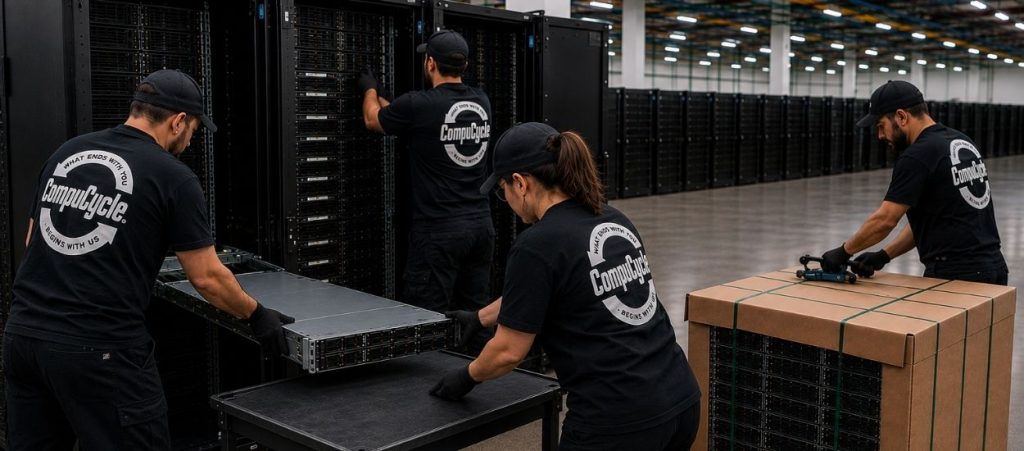
What to Expect During a Data Center Decommission or Relocation
