
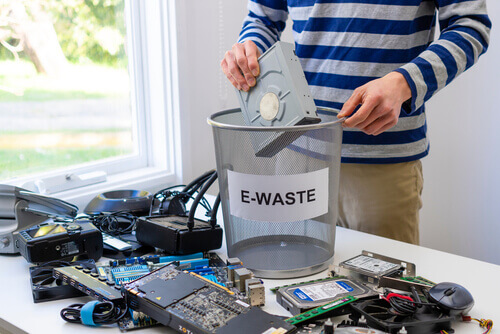
When it comes to e-waste recycling, the processes and systems can be extensive and complicated at the end of the operation. The business industry uses electronic items in its endeavors, and different sectors employ different technologies and assets. These different sources of electronics make up different e-waste disposal categories. Regardless of which category your business electronics waste recycling needs fall under, make sure you opt for a certified company to manage them. Here are the different categories of e-waste recycling:
Information Technology
Companies that are in constant need to upgrade and replace their IT systems and equipment are the ones that operate in the Information Technology sector. They have to keep up with the ever and fast-changing technology trends to stay on top of the transforming market needs. Electronic equipment, including but not limited to computers, servers, networking devices, and monitors, etc., are some of the most commonly replaced equipment in such companies. 34% of all e-cycle electronics recycling is performed on assets yielded from IT companies.
Manufacturing
Manufacturing companies not only have to frequently replace their equipment and devices to maintain the quality of their products following the changing customer requirements and expectations but the processes that are part of their manufacturing operations also produce e-waste, such as power supplies, wires, circuit boards for testing, and several other electronic components.
Products that manufacturing companies do not need anymore or are RMA defective and the e-waste category items that the manufacturing processes extract should be subjected to electronics recycling. Houston has around 10,700 manufacturing companies, and Texas had more than 17,000 in 2017. The amount of tech recycling material that such a high number of companies produce is monstrous, and the environmental impact, if not recycled in a responsible manner, can be devastating.
Medical
It is vital within the medical industry for their tools and equipment to be optimally working at all times. For this purpose, frequent replacement of electronic devices is inevitable. Technological advancements and updates in the industry frequently occur, and medical companies are always looking to update their electronic resources. This means that e-waste in medical companies is produced in large quantities and includes devices such as ultrasound machines, spectrometers, microscopes, centrifuges, analyzers, autoclave systems, etc.
Data Centers
Data centers, like IT firms, use a lot of electronic equipment to run their networks and systems. It also has a lot of computers and storage devices that it uses to safe-keep confidential and sensitive data for different businesses and organizations. Computer hardware recycling is something that data centers need to resort to frequently. Some of the items in data centers that they should manage e-waste recycling for include server racks, UPS batteries, APC batteries, servers, hard drives, etc.
Why Choose CompuCycle?

Computer recycling and disposal and electronics waste recycling and disposal are processes that can be performed in response as well as inefficient manners. There are environmental aspects attached with e-waste recycling and disposal that usually only responsible and certified companies are thinking of. CompuCycle is an electronics recycling and e-waste disposal company that employs only processes that are completely environmentally friendly and secure.
Another component is the safety and security of the data stored on the devices that are to be recycled. Medical records, manufacturing systems’ information, IT companies’ data are all sensitive and confidential and are vulnerable to risks associated with theft and cybercrimes. CompuCycle has a secure chain of custody and state-of-the-art equipment that ensures that all the data and information stored on your electronic devices remain completely secure and away from ill-meaning hands. Data centers are especially prone to such cyber threats, and any ‘incident’ can cause them legal trouble due to the strictness of consumer privacy policies and regulations.
Another factor that all companies that produce e-waste should consider pertaining to their e-cycle electronic recycling management is the value they receive against their devices that are reusable. CompuCycle has a strong network of buyers of refurbished electronic devices that are ready and willing to buy reusable and refurbished IT assets and electronics. You can get a good value out of your IT devices and computer hardware by opting for CompuCycle as your tech and computer recycling partner.
The process of electronics recycling starts with the pickup of electronics and follows their transportation to the e-recycling facility. Thorough testing and refurbishing of reusable devices and shredding of the non-reusable ones follow. The next step for the refurbished IT assets is reselling while the shredded pieces are sorted for reusable material and components that are utilized in the manufacturing of different products. The process ends with the disposal of the shredded pieces that have no further value left in them.
If your business produces e-waste, get in touch with CompuCycle to schedule a pickup. The company operates nationwide and accepts a wide range of electronic items for e-waste recycling. It refurbishes and re-markets the reusable electronics while carrying out e-waste disposal for the ones that cannot be reused. All its processes are fully compliant with responsible recycling regulations. For more information, please visit www.CompuCycle.com.
Recent Articles
The Domestic E-Plastics Crisis Nobody Is Talking About
The regulatory pressure on corporate sustainability has eased. That’s not a reason to stop doing the right thing. The Single-Use Problem Is Bigger Than Straws Every July, more than 170 million people in 190 countries…
ITAD Documentation That Actually Holds Up in an Audit
A Certificate of Destruction Is the Minimum. Here’s What Audit-Ready Documentation Looks Like. At the end of an ITAD project, most organizations receive a certificate of destruction and file it away. If an audit never…
Data Center Decommissioning Services: The Last Gap in Your Cybersecurity Plan
Does Your Incident Response Plan Cover What Happens After the Server Is Unplugged? Ask your CISO who owns decommissioning. Then ask your IT director. Then ask procurement. You’ll get three different answers — and that’s…
CompuCycle and Pearland ISD Launch TechCycle: A Workforce Training Program Giving Students with Disabilities a Real Path to Employment
Innovative electronics recycling program trains 18–22 year old students with disabilities in real-world job skills — and is already changing lives. PEARLAND, TX — CompuCycle, a Houston-based IT Asset Disposition (ITAD) and electronics recycling company,…

The Domestic E-Plastics Crisis Nobody Is Talking About
ITAD Documentation That Actually Holds Up in an Audit